About us
We’ve been here for you for 10 years.
We are the official and representative and registrar of the Alpenverein section Edelweiss Vienna. Our mission is to provide care and support to members in Slovakia. We contribute to raising awareness of the mountain lifestyle and building a relationship between people and nature. Learn more about Alpenverein.

Support for members
In direct representation of Alpenverein‑Edelweiss Vienna, we register members into the Austrian Alpine club.
- Consultations regarding insurance.
- Membership/insurance registration.
- Processing payment.
- Issuance of a membership card.
- Support for existing members.
Assistance in the event of a claim (damage incident).
If a claim occurs, don’t hesitate to contact us. We’ll help you report it and oversee the entire process.
- Assistance with filing a notice.
- Sending the notice.
- Supervision of the processing progress.
- Consultations during processing.
Österreichische Alpenverein
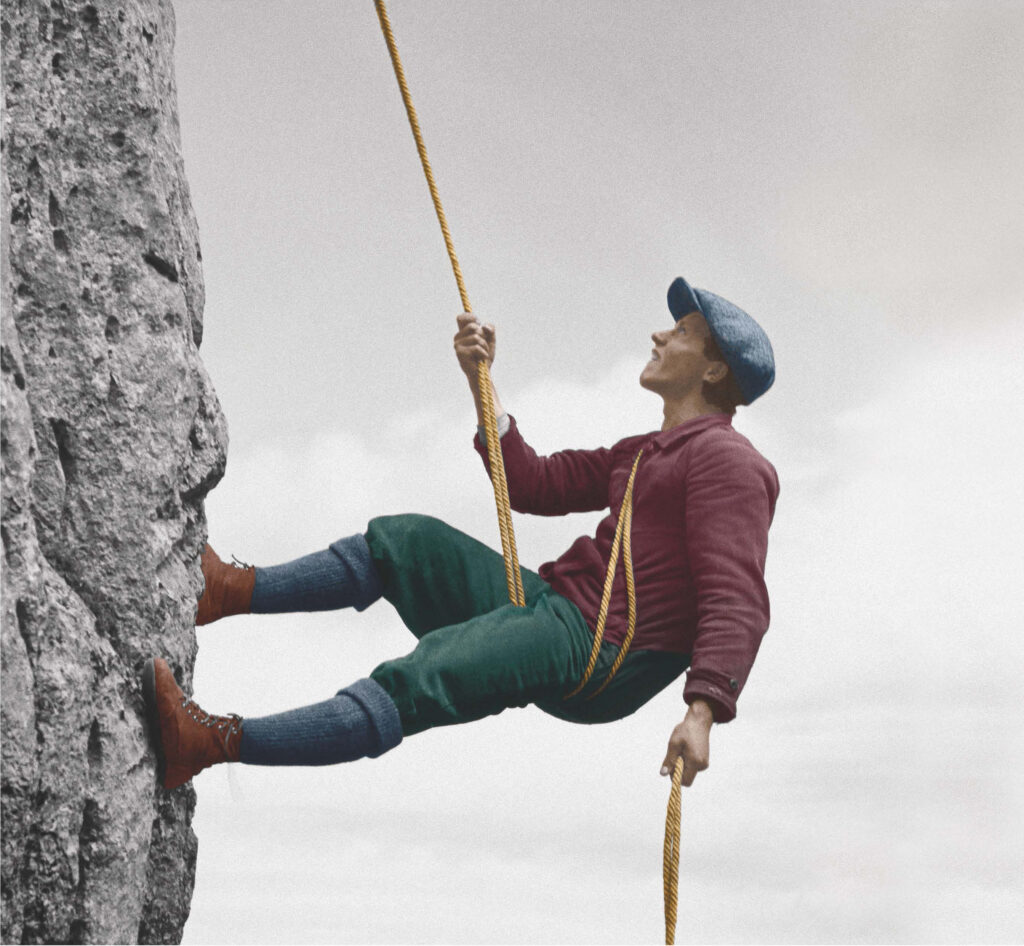
The Austrian Alpine Club (Österreichischer Alpenverein, OeAV) is a prestigious mountaineering association with a 150‑year history. It has more than 700 000 members. Thanks to its strong internal structure, which encompasses many activities and sports disciplines, it is an influential and socially active institution operating in Austria and abroad. In short, OeAV—or simply AV—brings together all enthusiasts and lovers of mountains and alpine nature, as well as active, sport‑oriented individuals and families. Anyone becomes a member of the association by a voluntary decision.
Education
All of these currents have left their mark on the development of the Alpine Mountain Club. Currently, the Alpine Mountain Club is most heavily shaping new extreme mountain sports, the pursuit of adrenaline and adventure, societal improvement, competition among nations, and the effects of modern information‑communication technologies.
Ecology
Alpenverein is the leading ecological expert on all environmental issues in this region. The Austrian Alpenverein club is a founder and partner in establishing and maintaining national parks and other protected areas. Club members work to preserve ecological order in locations with a high risk of environmental impact within protected territories.
Culture
The Alpine Club Museum – Alpenverein Museum was awarded the Austrian museum prize for Tyrolean museums. The OeAV club organizes exhibitions, creates creative programs, and produces magazines and brochures.
Society
All of these currents have left their mark on the development of the Alpine Mountain Club. At present, the greatest influence on the Alpine Mountain Club comes from new extreme mountain adrenaline sports, the pursuit of adventure, societal improvement, competition among nations, and the impact of modern information‑communication technologies.
History of the Alpenverein
Founding of the Austrian Alpine Association
On 19 November 1862, a meeting of the Austrian Alpine Club was held in the Green Room of the Academy in Vienna. The association Österreichischer Alpenverein (OeAV) set itself the goal of “spreading knowledge about the Alps, fostering love for them, and facilitating travel through them.”
Founding of the German Alpine Club (1869 – 1873) – merger of the Austrian and German Alpine associations
In 1869, German‑ and Austrian‑mountaineers founded the German Alpine Club (Deutscher Alpenverein – DAV) in Munich. At that time “German” did not refer solely to the nation of Germany but to all German‑speaking regions of Europe, and the eastern Alps were then called the “German Alps.” The DAV had separate sections ranging from northern Germany down to the Adriatic Sea. Each section managed its own area, building huts, constructing trails, providing education, training mountain guides, and handling publications.
Interwar period
Before World I, and especially in the years immediately after it, the Alpenverein fell under anti‑Jewish influences. Most sections in Austria introduced “Aryan clauses.” At that time Jews were barred from becoming members and even from staying in the club’s huts. In some parts of the empire this discriminatory practice began at the start of the 20th century. In 1905, the Viennese, German and Austrian Alpine associations adopted a rule that only a so‑called “Aryan” – i.e., a person of Germanic descent – could be a member. In 1907 and again in 1910 the Academy in Vienna and the one in Munich prohibited Jewish membership, and other societies followed suit.
In 1921, socialist Eduard Pichl became president of the Austrian section of the Deutscher Alpenverein and began promoting antisemitism. That same year the Danube branch admitted Jewish climbers such as A. Viktor Frankl, Fred Zinnemann and Joseph Braunstein. In 1924 the Alpenverein expelled that Danube branch from the overall federation, which at the time comprised 110 Austrian sections.
The newly formed group of Jewish and liberal members in the “Danube” section became a target of attacks by antisemites within the Alpenverein. In 1924 a compromise was reached: if the antisemites stayed out of the matter, the “Danube” section would be excluded.
With Austria’s annexation by the German Reich in 1938, the “Deutscher Alpenverein” was placed under the state’s mountaineering department of the Reich Sports Exercise Association (DRL), later renamed the National Socialist Reich Sports Exercise Association (NSRL). The headquarters of the Alpenverein, which had moved frequently before, was finally settled in Innsbruck from 1938 onward.
New priorities: sustainability and youth engagement
After World I, the Alpenverein took on many new responsibilities. It lost some sections in South Tyrol, along with branches in certain territories.
It didn’t take long—within a few years the membership tripled compared with pre‑war levels, the huts became overcrowded, and the excess comfort was rejected. Conflicts began to arise between the interests of climbers and mass tourism. The Alpenverein built new recreational facilities and focused on working with youth.
Harsh post‑war years – the Alpine Association struggles to survive
After World II, the Alpenverein embarked on a difficult path to clarify the legal status of the Austrian Alpine Club. The continued existence of the Alpenverein had to be upheld by the constitutional court, leading to partial reforms. In 1951 the DAV (Deutscher Alpenverein) reverted to the old name Austrian Alpenverein. The huts that had belonged to former German sections in Austria were operated on a trust basis only until 1955, when a contract was signed with the actual owners of the huts.
Continuous development
With the normalization of living conditions, economic boom, and activities, membership rose sharply again. People focused more on vacations and leisure time. In 1980, the Alpine Club was simultaneously dealing with several new development phases. The environmental movement led to stronger nature protection within the Alpine Club, which is the largest landowner in the National Parks. Sports events became much more varied, and new sport trends emerged. For the Alpine Club, the most notable development was the growth of sport climbing on natural rock and artificial walls. Since 1990, the number of members has increased much faster thanks to new services. A great enthusiasm for health and mindful outdoor exercise reinforced the importance of huts and hiking trails.
