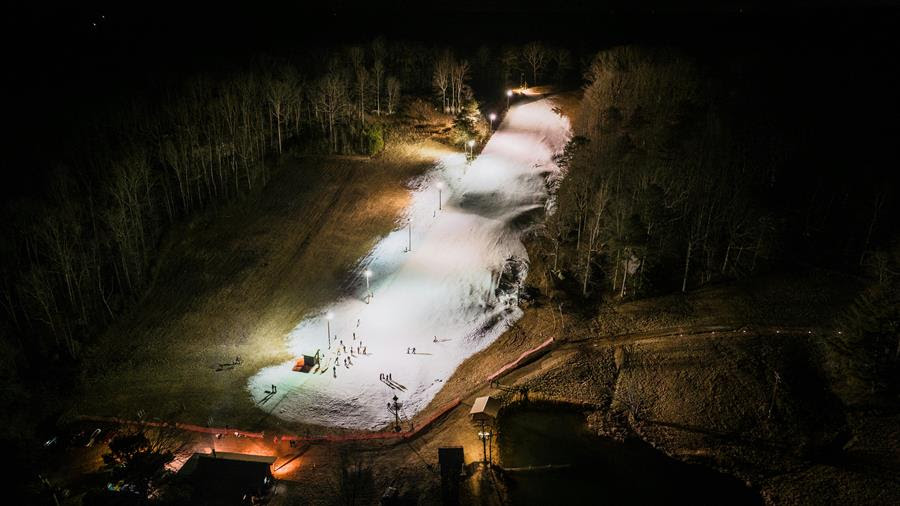
The winter of 2024/25 was one of the driest in decades. The lack of snow cover and the associated low snowmelt are causing the natural water supply in the Alps to decline dramatically, with serious consequences.
For example, Lake Grüner See in Styria, which is usually a summer natural gem, completely dried up in March 2024 due to low precipitation in the winter. The lake is gradually filling up again, but it is expected to reach a lower level than in previous years.
The lack of water is even forcing mountain huts to close – an example is the Edelrautehütte in the Rottenmanns Tauern. Some high-altitude huts depend on melting snow or rainwater. Due to the lower rainfall in winter, supplies often do not last until the end of the season. The Neue Prager Hütte has had to close early for this reason for three years in a row. Such hut closures affect other huts along the route, stages become impassable, and cancellations pile up. It is clear that water in the huts must be used sparingly. We can contribute to this, for example, by giving up showers in the huts. Mountain ranges and glaciers serve as water reservoirs.
Ecological mobility – Public transport network as a layer on maps
As part of reducing the impact on climate change and supporting sustainable tourism, we should prioritize ecological forms of transport when traveling on mountain hikes, such as:
- public transport (trains, buses to mountain areas),
- shared rides, electromobility (carpooling with other tourists or via apps),
- cycling and walking access where possible.
The aim is to minimise the ecological footprint associated with mountain travel while also contributing to the protection of the sensitive mountain environment. In many areas, there are convenient train connections to the starting points of the tours.
Some apps have public transport networks built into their maps, making mobility planning easier. These apps are available for both desktop and mobile.
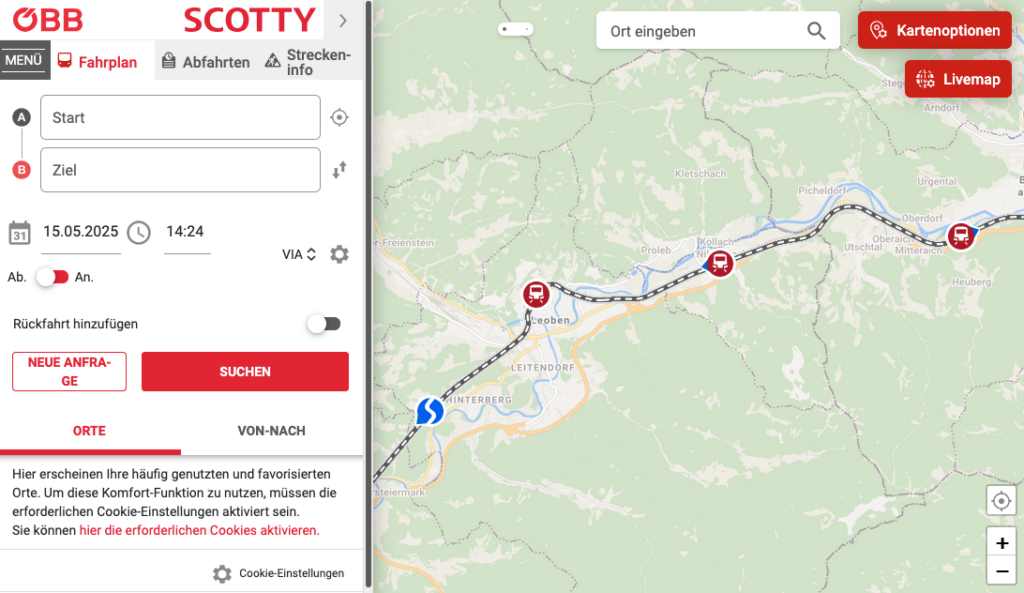
- ÖBB SCOTTY: In the desktop version, the homepage offers the option to selectively view the public transport network and get information about lines and timetables by clicking on a station. A station can be defined as a start or destination, view the timetable and buy a ticket or make a reservation. You can track the location of all trains in real time via the Livemap function.
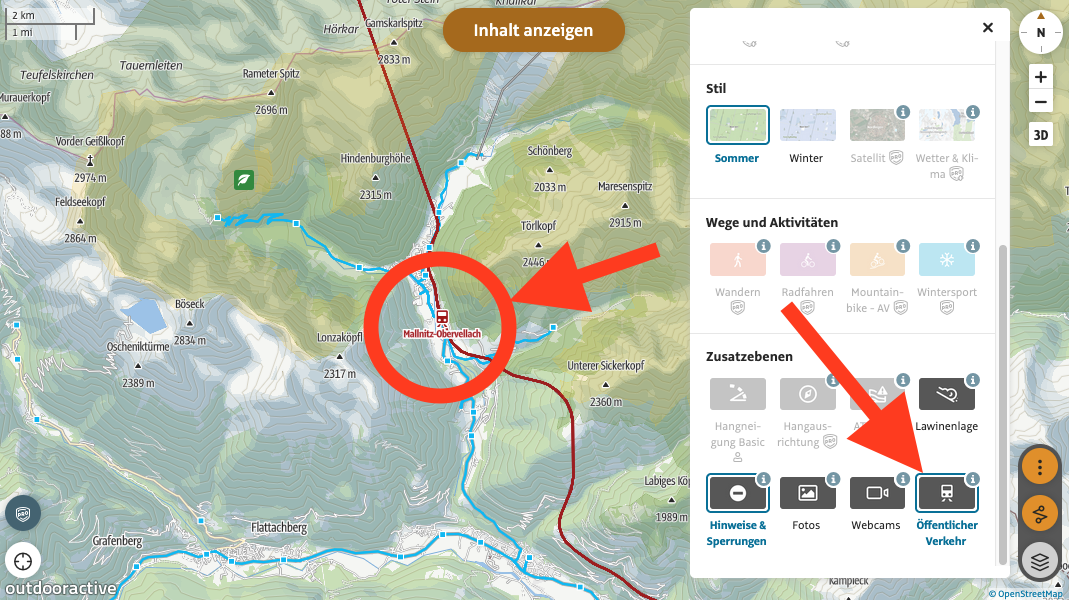
- Alpenvereinaktiv.com: V menu “Karte” (Mapa) a “Tourenplaner” (Plánovač túr) je dostupná nová vrstva „Öffentlicher Verkehr“ (Verejná doprava) ako na desktope tak aj v aplikácii pre smartfóny. Nájdeme ju v dodatočných vrstvách map OSM, Outdooractive a Topo map. Zobrazuje sa ako červená čiara pre vlaky a modrá čiara pre autobusy, ako aj označenie zastávok.
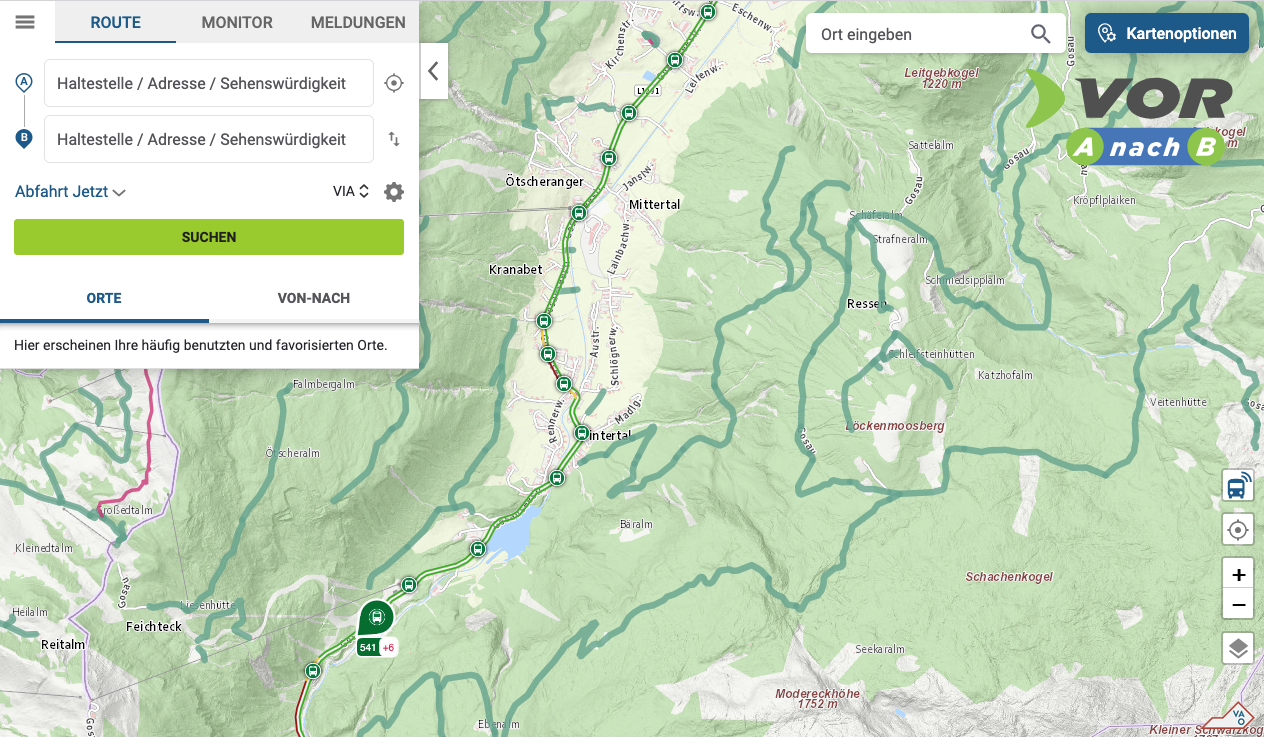
- vor.at: This service covers the whole of Austria (public transport including trains, regional buses and public transport). The functionality is comparable to SCOTTY, but with additional services, e.g. for cyclists, travel with electric cars (including charging stations), on-call taxis and cable car timetables. However, tickets cannot be purchased directly via vor.at. The vor.at app is a reliable guide for anyone who wants to travel to the mountains in an environmentally friendly, comfortable and stress-free way. It is particularly suitable for:
- Mountain bikers – allows you to search for connections with the possibility of transporting bicycles, combine a cycling route with a train or bus, and also display the cycling infrastructure in the area.
- Hikers – simply plan your journey from your accommodation to the start of the hiking trail, including transfers. The app also takes into account seasonal connections to mountain areas (e.g. Wanderbus).
- Web portal for desktop
- iOS app – VOR AnachB
- Android app – VOR AnachB
Ski season: A winter that makes you think
With the arrival of spring, we look back at the ski season, which has clearly shown us how much climate change is changing our favorite winter landscapes. The past months have been marked by a lack of snow, which has significantly limited the experience of skiing and ski mountaineering, especially in lower altitudes. We had to cancel ski mountaineering tours or take them at increased risk in these conditions. Even ski resorts that used artificial snow often offered a sad sight of white slopes in the middle of brown landscapes.
